Emilito corriendo

Mostrando entradas con la etiqueta 2ºESO. Mostrar todas las entradas
Mostrando entradas con la etiqueta 2ºESO. Mostrar todas las entradas
domingo, 2 de junio de 2019
PE QUESTIONS REVIEW 2nd ESO
*Aquí encontrarás un resumen de los aspectos más importantes que hemos visto a lo largo del curso.
Haz CLICK en el enlace:
PE QUESTIONS 2nd ESO

viernes, 23 de marzo de 2018
WINTER OLYMPIC GAMES
The Winter Olympic Games is an event held once every four years for sports practised on snow and ice. The first Winter Olympics were held in Chamonix, France, in 1924.
The list of sports has not changed since skeleton was added in 2002.
The 15 sport disciplines of the Winter Olympics are categorized into three main categories:
(1) Ice sports
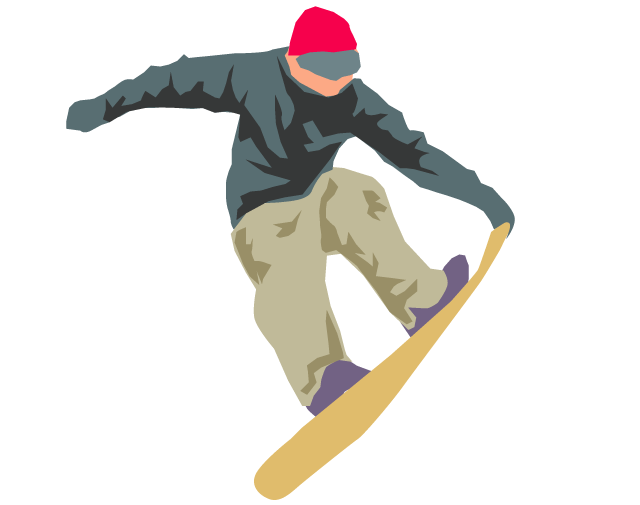
(2) Alpine, skiing and snowboarding events
(3) Nordic events. In each of these sports categories there are more specific events as listed.
Ice Sports
- Bobsled (Two-man, Two woman and Four-man)
- Luge
- Skeleton
- Ice Hockey
- Figure Skating (Men's singles, Ladies' singles, Pairs, Team and Ice Dancing)
- Speed Skating
- Short Track Speed Skating (500m, 1,000m, 1,500 m and Relays)
- Curling
 Alpine, Skiing and Snowboarding Events
- Alpine Skiing (Downhill, Super G, Giant slalom, Slalom, Super Combined, mixed team)
- Freestyle Skiing (Aerials, Moguls, Ski Cross, Ski halfpipe and Ski slopestyle)
- Snowboarding (Parallel Giant Slalom, Halfpipe, Snowboard Cross, Big Air and Slopestyle)
Nordic Events
- Biathlon (combining cross-country skiing and target shooting: individual, sprint, pursuit, mass start & relay events)
- Cross-Country Skiing (individual and team sprint, freestyle, pursuit, classical and relays)
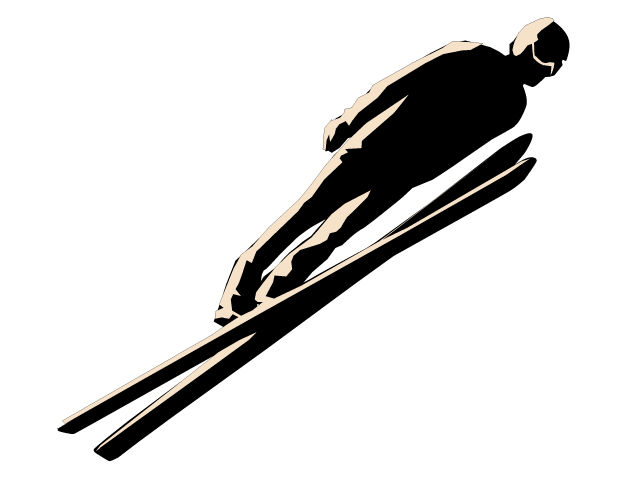
- Ski Jumping
- Nordic Combined (ski jumping and cross-country skiing)
You may watch some of these sports in the videos below.
Snowboard cross:
Curling competition:
About biathlon:
domingo, 13 de noviembre de 2016
Soccer -Football
Click on the link and learn the most important rules about soccer.Link: Soccer .Basic rules.
Prezi:Soccer .Presentation
Los apuntes en español, así como más información y enlaces los encontrarás más abajo.
domingo, 28 de octubre de 2012
The heart
THE HEART
Your
heart is really a muscle. It's located a little to the left of the
middle of your chest, and it's about the size of your fist.
There
are lots of muscles all over your body — in your arms, in your
legs, in your back...
The
heart sends blood around your body. The blood provides your body with
the oxygen and nutrients it needs. It also carries away
waste.
Your heart is like a
pump, or two pumps in one.
- The right side of your heart receives blood from the body and pumps it to the lungs.
- The left side of the heart does the exact opposite: It receives blood from the lungs and pumps it out to the body.


*THE
CIRCULATION:
-The
blood vessels called ARTERIES carry blood away from the heart.
-The
blood vessels called VEINS carry blood back to the heart.
*THE
SOUND OF THE HEART:LUB-DUB!
-The
valves mitral (left) and tricuspid(right) are between atria and
ventricle.
-The
valves aortic (left) and pulmonary(right) are in the ventricles.
-The
first sound happens when the mitral and tricuspid valves close.
-The
next sound happens when the aortic and pulmonary valves close.
Vídeo sobre el corazón:
Sístole y diástole.Sonidos del corazón
*THE PULSE:

blood
and its contents around the body”

FINGERS:
Index and middle finger.
Count
the beats for: .
-15
seconds and multiply by 4 (Bpm)
-10seconds and multiply by 6 You will get your
beat per minute, that's your
-6
seconds and multiply by 10 HEART RATE

La pirámide del ejercicio.
Imagen tomada de http://sincitapreviauniradio.blogspot.com.es/

ACTIVIDADES ON LINE
1.La toma de pulsaciones
2.El corazón:Actividades on line
3.El sistema cardiovascular en el ejercicio
4.El control de la actividad física mediante la toma de pulsaciones.
**Haz click en este enlace y profundizarás un poco más en el tema de la frecuencia cardiaca:
Frecuencia cardiaca
HOMEWORK
Name: ________________________________ Group: ________
La pirámide del ejercicio.
Imagen tomada de http://sincitapreviauniradio.blogspot.com.es/
ACTIVIDADES ON LINE
2.El corazón:Actividades on line
3.El sistema cardiovascular en el ejercicio
4.El control de la actividad física mediante la toma de pulsaciones.
**Haz click en este enlace y profundizarás un poco más en el tema de la frecuencia cardiaca:
Frecuencia cardiaca
HOMEWORK
Name: ________________________________ Group: ________
1.The
right side of the heart pumps blood, where?
2.Why
is the wall of the left ventricle thicker?
3.What
is the purpose of the atrioventricular valves?
4.What
causes the “dub” sound of the heart beat?
5.Where
does blood go after it leaves the left atrium?
6. ¿Qué es la frecuencia cardiaca máxima o índice cardiaco máximo?
7. Si eres un chico y tu frecuencia cardiaca máxima es de 206 pulsaciones por minuto ,¿cuál es tu edad?
8.¿Cuál sería la frecuencia cardiaca de una chica de 14 años?
9.¿Cuánto tiempo debemos tomar las pulsaciones? ¿Por qué?
10. ¿Con qué dedos y en qué zona debemos tomar las pulsaciones?
Suscribirse a:
Entradas (Atom)